





“Build an effective family emergency savings fund through these steps.”
1. Introduction to family emergency savings fund
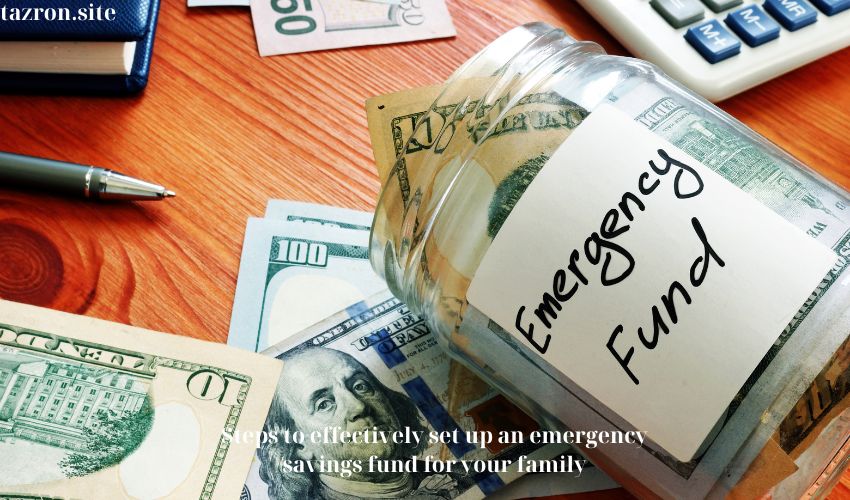
A family emergency savings fund is a sum of money set aside to deal with emergencies and unexpected situations in life. This is an important part of personal financial management, helping to protect the family from unexpected financial risks.
1.1 Benefits of emergency savings fund
– Protects your family from unforeseen emergencies.
– Helps avoid debt and borrowing when unexpected expenses arise.
– Creates investment opportunities and enhances financial stability for your family.
1.2 Amount needed for emergency savings fund
– Calculate your family’s monthly living expenses.
– Determine how much money you need to cover living expenses during a period of job loss or other emergency.
2. Determine the goal and significance of setting up an emergency savings fund
It is important to define the purpose and meaning of an emergency savings fund so that you understand its importance in your daily life. The purpose of an emergency savings fund is to ensure that you have enough money to deal with emergencies and unexpected situations without having to worry about finances. The purpose of this fund is to help you ensure your life is safe from unpredictable events in the future, such as job loss, illness, or sudden repair costs. By clearly defining the purpose and meaning of an emergency savings fund, you will realize its true value and feel more motivated to save and manage your personal finances.
3. Benefits of setting up an emergency savings fund
– Ensure a safe life against unpredictable future events.
– Help you avoid falling into debt and borrowing.
– Increase your confidence at work and help you make more effective investment decisions.
– Support each person in building and implementing a scientific personal financial management plan.
3. Assess family financial situation
When starting to create an emergency fund, it is important to assess your family’s financial situation. You will need to consider your total monthly income, fixed expenses, savings and investments, as well as debts and other savings. This will help you better understand your current financial situation and determine how much money you can put into an emergency fund.
Steps to assess family financial situation:
- Consider total monthly income from all sources, including salary, business income, or other supplemental income.
- Evaluate fixed monthly expenses like rent, electricity, water, and unavoidable monthly expenses.
- Identify existing savings and investments, as well as outstanding debts.
- Review your monthly savings and investment spending to see if you can increase your emergency savings fund.
4. Determine how much money you need to set up an emergency savings fund
When determining the amount of money needed to set up an emergency savings fund, you need to calculate according to the following options:
4.1. Amount of money to cover living expenses when losing a job
– Calculate how much money you need to cover your monthly living expenses like rent, groceries, bills, and other fixed expenses.
– Multiply the monthly amount needed by the number of months you want to save, such as 3 to 6 months or up to 1 year.
4.2. Provision for illness and disease
– Set aside a small portion, about 5% to 15% of your total monthly income, for contingencies in case of illness or disease.
– Save a significant amount of money after 1 to 2 years to ensure sufficient funds for medical treatment.
Determining how much money you need to set up an emergency savings fund will help you have a specific financial plan and ensure you are prepared to face emergencies.
5. Build a monthly savings plan
To build an effective emergency savings fund, it is extremely important to determine and implement a monthly savings plan. Here are some steps to help you build a monthly savings plan:
1. Determine savings goals
First, you need to clearly define your monthly savings goal. This could be a specific amount you want to save or a fixed percentage of your monthly income.
2. Income distribution
Once you have determined your savings goal, you need to allocate your income so that savings are a top priority. You can use the 50-30-20 method, in which 50% of your income goes to fixed expenses, 30% to consumption, and 20% to savings.
3. Automate savings
An effective way to save money every month is to automate the process. You can set up an automatic transfer from your spending account to your savings account as soon as you receive your paycheck. This helps you never forget to save and creates an automatic savings habit.
By creating a monthly savings plan and sticking to it, you will be able to build up a significant buffer in your savings account.
6. Choose an effective method of saving money
Once you have determined your savings goals and calculated the amount of money you need for your emergency fund, the next step is to choose an effective way to store your savings. Here are some methods you can refer to:
1. Savings account
– Savings accounts are a popular and safe way to store savings. You can open a savings account at a bank and receive fixed or variable interest rates depending on the bank’s conditions.
2. Savings term
– If you want to get a higher interest rate than a regular savings account, you can choose a savings term. You will have to put the money in for a certain period of time and cannot withdraw it early without incurring a penalty.
3. Investment fund
– If you want to maximize the return on your savings, you can consider investing in investment funds. However, investing always comes with risks, so you need to research carefully before deciding to invest.
Remember, choosing a savings method should be consistent with your goals and personal financial situation. Consult a financial professional before making a decision.
7. Adjust your family budget to save money for an emergency fund
Once you have determined your goals and the amount of money you need for your emergency fund, you need to adjust your family budget to save money for your emergency fund. Here are some ways you can create a source of savings for your emergency fund:
Apply the 50-30-20 rule
– 50% of your income is for fixed and necessary expenses such as daily living expenses, rent, electricity, water, internet, etc.
– 30% of your income is for entertainment and personal expenses such as eating out, shopping, traveling, etc.
– 20% of your income is for saving and investing, including a portion of money for a financial reserve fund.
Reduce unnecessary costs
– Review monthly expenses and eliminate unnecessary expenses such as unused household services, unnecessary entertainment packages, etc.
– Find ways to save on daily activities such as cooking at home instead of eating out, using public transportation instead of driving your own car, etc.
– Find ways to reduce shopping costs by looking for promotions, discounts and using discount codes when shopping online.
By adjusting your family budget and saving money for an emergency fund, you will have more financial reserves to deal with unforeseen emergencies.
8. Deal with unnecessary spending
When building your emergency savings fund, it’s important to tackle unnecessary spending. First, you need to identify which expenses are unnecessary and can be cut back. This could include cutting back on eating out, cutting back on branded goods, or eliminating unnecessary services like cable TV packages.
How to handle:
- Analyze and evaluate monthly expenses to identify unnecessary expenses.
- Set a rule to cut back on spending, such as not buying new clothes if your wardrobe is still full, or not eating out too often.
- Follow your spending cut plan systematically and patiently.
Dealing with unnecessary spending will help you save a significant amount of money to invest in your emergency savings fund. At the same time, it also helps you create a habit of saving and managing your finances more effectively.
9. Develop a contingency plan for emergencies
An emergency plan is an important part of personal financial management. Having one helps you prepare mentally and financially for unexpected situations like job loss, illness, or unexpected repair costs. Here are some steps to creating an effective emergency plan:
1. Determine your goals and the amount of money you need
First, you need to determine a specific goal for your emergency plan. Calculate the amount of money needed to cover living expenses for the period of time you want to save, such as 3 to 6 months or even 1 year.
2. Save little by little
Once you have identified your goals, start saving money little by little. You can set aside a small portion, around 5% to 15% of your total monthly income, for your emergency plan. This will help you build up a savings fund gradually.
3. Safe investment
In addition to saving, you can also consider safe investments like bonds, savings accounts, or life insurance to increase the value of your emergency savings fund.
By taking the above steps, you will have an effective financial backup plan and be ready to face life’s emergencies.
10. Periodically review and adjust your family’s emergency savings fund.
Once you have built up your emergency savings fund, it is important to periodically review and adjust it to ensure that it still meets your family’s emergency needs. Here are some simple steps to help you do this:
Financial Assessment
– Periodically review your and your family’s financial situation to make sure your emergency savings fund is still appropriate for your current situation.
– Consider any changes in income, expenses or debts, and adjust your emergency savings fund based on these changes.
Adjust savings goals
– If there is a change in your financial situation, adjust your emergency fund savings target to reflect these changes.
– If your income increases, you may consider increasing your monthly savings to your emergency fund. Conversely, if there is a decrease in your income, you may adjust your savings target down slightly to ensure that it is still affordable given your current financial situation.
Regularly reviewing and adjusting your emergency savings fund is an important part of personal financial management. This helps ensure that funds are available to deal with emergencies without putting unnecessary strain on your family finances.
In conclusion, setting up an emergency savings fund for your family is very important to ensure financial security in case of emergency. By defining savings goals, creating a plan and proposing a budget, your family can best prepare for any emergency situation.